
My accent
And how much would I trade for a "perfect" American English one?

My English has an accent. Not too surprising, considering that I had spent the first 17 years of my life in Vietnam before moving to the United States.
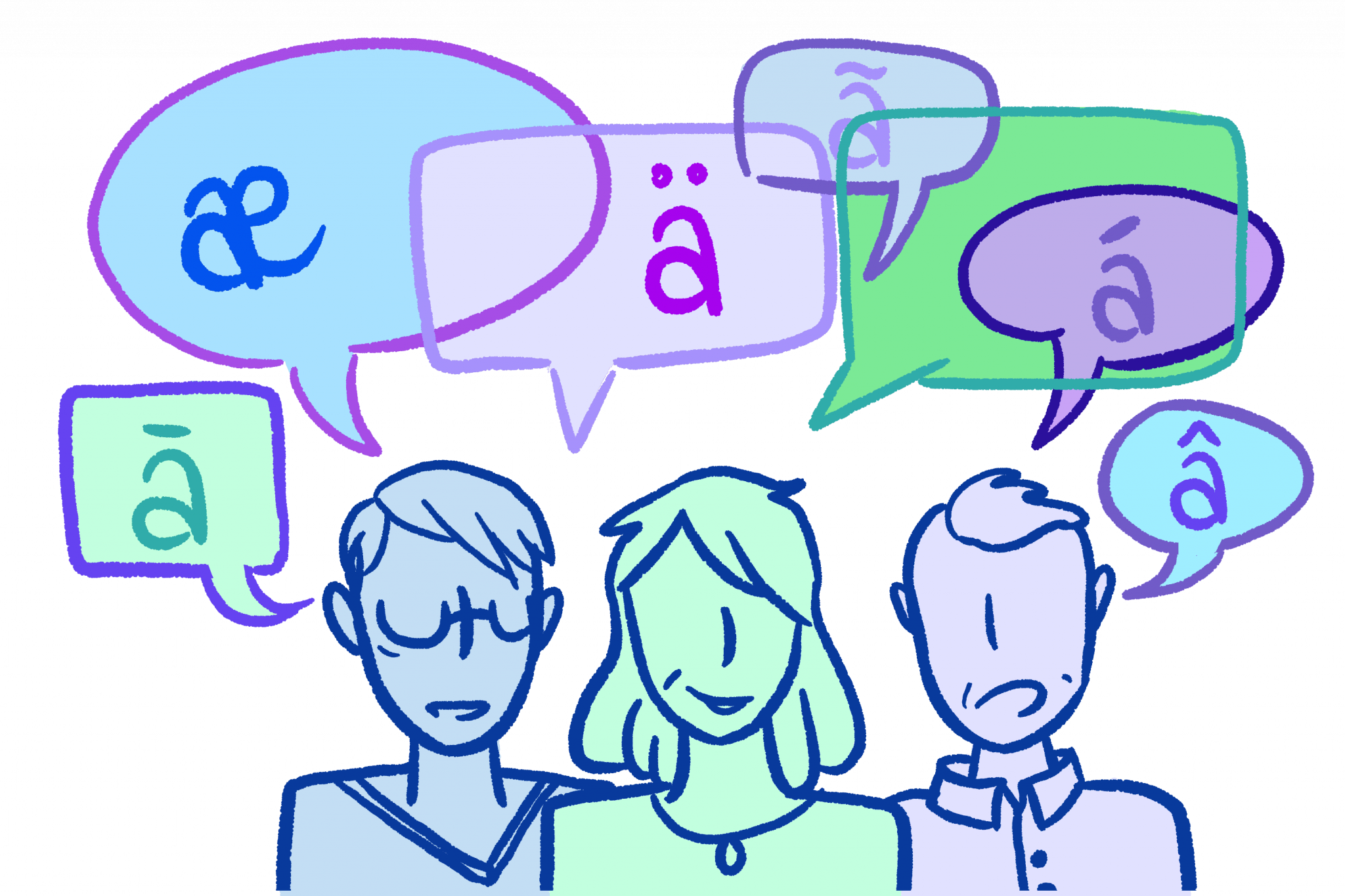
My first day at an American school was in the middle of junior year. I was at the guidance counselor’s office - Ms. McCormack’s. The wind was furiously blasting all the snow outside of her window. She peered over my report and preliminary English aptitude test. She must have been satisfied with the results, because she started talking to me in English at full speed. I was panicking on the inside, trying to catch up to every single word she was saying.
She then took me to the different classes that I would be taking, to meet the teachers. Mr. Sheehan, Mr. Korzeniowski, Ms. Connie, etc., they all shook my hand, all so kind and welcoming.
Then I was plunged right into my first class of the day - an English Literature class with the native speakers. The teacher was also very nice, and he assigned me a seat right next to the only other Vietnamese student. She was a little puzzled, at first, of how a brand-new Viet kid was put in this class. My school had a decent number of Vietnamese and immigrant students, but there were only two of us Viet’s in this class of twenty something kids.
Thus started my academic journey in America. The kindness of friends and teachers helped me adjust well. Soon, I joined the debate club, played soccer for the school team, and taught math to other kids. I did not feel like a stranger. In fact, my communications with other kids and the teachers went without a hitch. I was learning and having so much fun. My English accent never crossed my mind. Maybe because many kids at my school spoke with different accents, it helped me blend right in.
Shattered illusion
It was not until college that someone pointed out that I spoke English with an accent. Then I started to listen to my recordings (for different classes) and I realized, to my horror, that they were right.
The “perfect English” illusion that I thought I was speaking collapsed. So I didn’t speak the same way that other native English speakers do. So it doesn’t matter how good or perfect my English grammar, diction, inflection, and composition in my head are, once spoken, they would appear imperfect. How can others take me seriously if I speak with an accent?
I tried so hard to practice a native accent, insofar as seriously considering paying a decent amount of money for an “accent class”. Sometimes, I wish I could just speak with a “perfect” American English accent. Oh, how much would I trade for that.
Indeed, how much am I willing to trade for a “perfect” American English accent?
Accents exist mostly because of muscle memory. Our tongue is one of the most active muscle groups in our body. It helps us eat, swallow, breath, and speak. Just like with most muscles, once you repeat certain activities with a muscle group often enough, it would be hard for that muscle group to change to a completely different set of activities.
At that point, I had spent over seventeen years of my life speaking Vietnamese, with a Huế (or central Vietnamese) accent. And I talked, a lot. So when I thought I was speaking perfect English, my tongue was churning it out with some Huế-ian flavors.
Trade-off
Maybe if I was born in the U.S., or if I had come here years earlier, I wouldn’t have to speak with this accent.
But that would mean undoing many years of me speaking Vietnamese. That would mean removing all the chats I had with my friends, all the conversations I made, all the assertions that I articulated, all the words that I uttered.
I realized, then, that my accent was my proof of existence, an attestation for my Vietnamese self. It was the product of all the memories and experiences I made, good and bad. It was growing with me, as I grew as a person. It was a display of my essence. It was central to my identity - a part of me that I cherish entirely.
So I asked myself once more: would I trade all of that away for a “perfect” American English accent?
The answer this time was surprisingly simple: Absolutely not.
Turns out, having this accent means I was experiencing an entirely different world from the one in the U.S., which is not something that everyone can enjoy. It was a gift, an incredible privilege to be exposed to such richness and distinct cultures and life experiences. I should not be ashamed, I should be glad to speak with an accent.
Still, with that accent, I’ve had so many native speakers be kind to me. They did not ridicule or demean me because of any of my perceived “imperfections”. They have always shown me respect and treated me with dignity. I was the only one degrading myself.
That was another reason to be thankful of my accent, to open my eyes to how well others treat me despite my own insecurities. I realized I spent a lot of time worrying about something that really doesn’t matter that much. I don’t judge another person’s opinion or character based on their accent anyway, so why judge mine?
So on second thought, I will take it. I will take the accent. I will take all the kindness that others have shown me, and all the beautiful experiences that I’ve been through. I will not waste my days worrying and rejecting this blessing in disguise. I am sincerely grateful for it.
Besides, you’ve been reading this post, and you’ve not noticed my accent, have you?